Acne grades 1-2 represent the milder spectrum of acne conditions. Grade 1, often called mild acne, typically consists of just blackheads and whiteheads, while grade 2, or moderate acne, may feature a greater number of lesions and occasional inflammatory pimples. With the consideration of light therapy to target these milder forms, it’s pertinent to reflect on the different types of acne scarring that could also benefit from such treatments.
As a minimally invasive treatment option, light therapy offers promise to those with mild to moderate acne and even those exploring acne scars types and treatment. By harnessing the power of specific wavelengths of light, this therapy sets out to mollify both active acne lesions and the scars they may leave behind without the abrasive features of chemical interventions.
The use of light therapy in addressing hypertrophic acne scars types provides an interesting glimpse into its restorative potential. By promoting collagen remodeling, light therapy can help minimize the appearance of raised scars, offering a smoother skin texture as a result. The allure of light therapy lies in its simplicity and the deftness with which it disrupts the acne-causing bacteria’s proliferation. It doesn’t just wage war against existing blemishes but also works preemptively, reducing the likelihood of future flare-ups. Herein is a brief exposition of how it achieves these feats.
The Science Behind Light Therapy for Acne
At the crux of light therapy’s efficaciousness is its ability to penetrate the skin and incite a cascade of therapeutic reactions. Hypertrophic and other types of acne scars can sometimes make the skin more vulnerable, but light therapy is adaptable and can be tailored to suit these skin conditions. Here’s how light therapy unfolds:
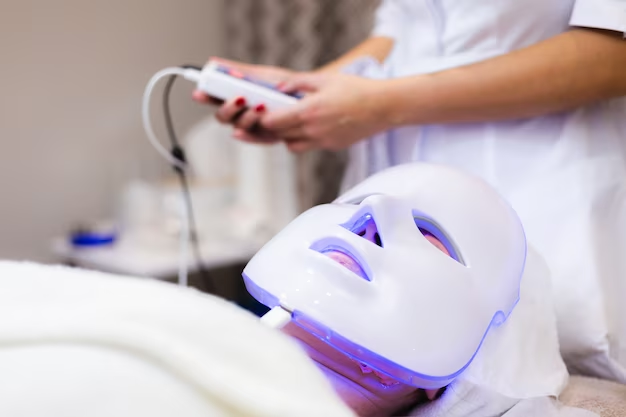
- Blue Light Treatment: Targets and neutralizes Propionibacterium acnes, the bacteria exacerbating the inflammatory response within pores and often associated with various acne scars types and treatment success.
- Red Light Treatment: Promotes healing by reducing inflammation, with the added benefit of improving skin’s overall tone and texture, arguably affecting different types of acne scarring positively.

Types of Light Therapy
For those anguishing under the tyranny of acne and in pursuit of acne scars types and treatment, the following types of light therapy present solace:
- Blue Light Treatment The germicidal effect of blue light makes it adept at both sanitizing the skin’s surface and diving deep to obliterate bacteria. It’s the frontline treatment for grades 1-2, leading the charge with a success rate that validates its standing, not just for active acne but also in lightening the post-acne marks and types of acne scars and treatments.
- Red Light Treatment Complementing the bacterial purge of blue light, red light therapy enhances healing and mitigates inflammation, restoring the skin’s former tranquility. It’s a gentle yet effective ally, coaxing the skin back to health, including the appearance of hypertrophic acne scars types.
- Combination Light Therapy Occasionally, a dual approach maximizes results. Combining blue and red light therapies tackles bacteria and inflammation in tandem, offering a comprehensive treatment package against acne and potentially reducing different types of acne scarring.
Benefits of Using Light Therapy for Acne
The advantages of light therapy for acne are bountiful:
- Reduced Dependency on Pharmaceuticals: Eschewing the regular cadence of topical or oral medication, light therapy eliminates concerns about antibiotic resistance or medication side effects, and can complement other types of acne scars and treatment modalities.
- Preventative Action: Not only assuaging present blemishes, but light therapy also obstructs the path of future ones, offering a holistic strategy in acne management.
- Enhanced Skin Texture: By stimulating collagen and vascular functions, light therapy gifts the skin a more even tone and youthful appearance, giving hope to those with different types of acne scarring seeking repair and rejuvenation.
Comparing Light Therapy with Conventional Acne Treatments
| Aspect | Light Therapy | Conventional Acne Treatments |
|---|---|---|
| Mode of Action | Uses specific wavelengths of light to target acne-causing bacteria and reduce inflammation. | May include topical treatments (such as benzoyl peroxide or salicylic acid), oral medications (antibiotics, retinoids), and lifestyle modifications. |
| Targeted Population | Suitable for individuals with mild to moderate acne, especially those who may not tolerate or respond well to other treatments. | Varies depending on the severity of acne; conventional treatments are often used for a wide range of acne cases. |
| Side Effects | Generally well-tolerated with minimal side effects such as temporary redness or dryness. | Possible side effects include dryness, irritation, peeling, and, in the case of oral medications, systemic effects like gastrointestinal issues or photosensitivity. |
| Treatment Duration | Multiple sessions over weeks to months may be needed for optimal results. | Varies based on the treatment type; topical treatments are often applied daily, and oral medications may be taken for weeks or months. |
| Mechanism of Reducing Acne | Kills bacteria, reduces inflammation, and may have a mild effect on oil production. | Addresses various factors, including bacterial overgrowth, excessive oil production, and clogged pores. |
| Availability | May require visits to a dermatologist’s office for professional light therapy or can be done at home with some devices. | Topical treatments are available over-the-counter, while stronger medications and oral treatments often require a prescription. |
| Cost | Professional light therapy sessions may incur costs, and some devices for home use can have upfront expenses. | Costs vary depending on the type of treatment and whether prescription medications are involved. |
| Long-Term Considerations | May be used as a long-term maintenance option after an initial treatment period. | Long-term use of certain medications may be necessary for ongoing acne management. |
Light therapy, in its essence, is a departure from the classical doctrines of acne treatment. Where conventional methods often employ an armamentarium of creams, gels, or systemic drugs, light therapy distinguishes itself through its non-pharmacological approach and capacity to address both the active acne and the different types of acne scarring.
Traditional acne treatments have long been anchored by benzoyl peroxide, salicylic acid, and retinoids, standing as the bulwarks against stubborn acne. While undoubtedly effective, they often come with a battalion of side effects like dryness, irritation, and sun sensitivity. Light therapy enters the fray, brandishing its technology with fewer adverse reactions and a shorter recovery time. It emerges as a particularly enticing option for those whose skin balks at the harshness of chemical treatments and those considering it among options for different types of acne scarring.

Who Is the Ideal Candidate for Light Therapy?
The call for light therapy isn’t a blanket prescription; it’s a targeted recommendation that nudges individuals with specific concerns into the light. Assessing your acne grade is a crucial first step. If your skin is inscribed with the hallmarks of acne grades 1-2 and you’re cognizant of your increasing resilience to other therapies, then light therapy might be your match. It proves especially transformative for those whose skin is sensitive or for whom traditional treatments have yielded unsatisfactory side effects.
But light therapy isn’t insular in its application—it often holds hands with other treatments. For instance, a dermatologist might suggest combining light therapy with medicated creams for a hybrid approach to manage both active acne lesions and the looming threat of future outbreaks. Seeking light therapy is about collaboration; your skincare specialist will gauge your candidacy based not only on the present landscape of your skin but also on your medical history, skin type, and acne’s narrative on your dermal canvas.
Preparing for Light Therapy
Preparation for light therapy leans on the side of simplicity, but it does necessitate a feasibly clear canvas. Prior to indulgence in the glow of therapeutic light, it’s important to:
- Circumvent skin products that increase sensitivity to light, such as certain retinoids or acids.
- Refrain from excessive sunlight exposure to avoid complicating the skin’s response to treatment.
On the day itself, you’ll be furnished with protective eyewear, nowadays almost a rite of passage in the realm of light-based therapies. The session, often brief and bereft of pain, will see you communing with the serenity of gentle waves of light as they dance across your skin, striving to eradicate the plethora of issues that acne has tendered.
Aftercare and Managing Expectations
Post-treatment care is virtually unburdensome. Light therapy, with its congenial approach to skincare, does not demand extensive post-procedural rituals. The most pivotal bit of aftercare is solar discretion—ensuring adequate protection from the sun to safeguard the newfound vulnerability of your treated skin.
Expectations need tempering with realism when it comes to any medical treatment, and light therapy is no different. Improvements are often discerned incrementally—a gradual fading of lesions here, a subdued inflammation there. The skin’s language is subtle, and it speaks in a timbre of gradual improvement. Patience is paramount, and consistency in attending follow-up sessions fortifies the potential for remission.
The Significance of Consistency in Treatment
For light therapy to extend its full repertoire of benefits, consistency is key. The frequency of therapy sessions typically relies on the individual’s skin condition, but it generally adheres to the following structure:
- An initial series of treatments spaced over several weeks.
- Maintenance sessions that might be scheduled periodically to sustain results.
Over time, the cumulative effect of these sessions cements the initial improvements. In the long term, light therapy aims to establish an environment of remission, where acne is but a whisper of its former self. The goal is to reach a point where the light therapy sessions taper in frequency, making way for a more sustainable, autonomous skin maintenance routine.
Potential Side Effects and Risks of Light Therapy
The narrative surrounding light therapy is predominantly positive, but a story without its caveats is only half told. Common side effects, although usually transient and mild, can include:
- Redness
- Slight swelling
- Dryness or peeling
- A sensation of tightness
These symptoms are generally self-limiting and vanish with the passage of days. To mitigate risks and side effects, it’s vital to comply with the post-treatment recommendations of your healthcare provider diligently.
Real-World Successes: Testimonials and Before-After Comparisons
Anecdotal accolades and visually striking before-and-after comparisons substantiate the efficacy of light therapy. People across continents, young students, and seasoned professionals alike, have beheld the metamorphosis of their skin—often illuminated by the success of light therapy in managing acne grades 1-2. Charting their journeys through testimonial narratives, many articulate a newfound confidence and a relief that burgeoned with each session. For them, light therapy was the missing piece in the intricate puzzle of acne management.

Cost and Accessibility of Light Therapy
The financial investment in light therapy can vary widely, based on geographic location, facility, and treatment frequency. A typical cost breakdown can involve:
- Initial consultation fees
- Per-session charges
- Potential package deals or cumulative discounts
Accessibility to light therapy has burgeoned over the years with the advent of at-home devices. However, like any medical treatment, professional oversight is recommended, especially to craft a regimen tailored specifically to your skin’s needs.
In a nutshell
In conclusion, light therapy stands as a stalwart ally in the fight against acne grades 1-2, emanating hope for those who’ve grown wary of conventional treatments. Its potential extends to the realm of lightening scars and improving skin texture, promulgating not just a solution but also the possibility of prevention. As technology marches forward, its embrace in the field of acne management grows ever more encompassing, lighting up the dermal horizon with the promise of clearer days.
FAQs
Is light therapy suitable for all skin types?
Yes, light therapy is generally suitable for all skin types. It is especially helpful for individuals with sensitive skin who might react adversely to topical treatments.
How long does it take to see results from light therapy?
Results can vary, but many individuals notice improvements within a few weeks. However, optimal results often require a consistent series of treatments over several months.
Can light therapy cure my acne permanently?
While light therapy can significantly reduce acne symptoms and prevent future breakouts, it is not typically promoted as a permanent cure. Ongoing maintenance sessions might be necessary.
Are there any long-term side effects associated with light therapy?
Long-term side effects of light therapy are rare when the treatment is performed correctly. It’s important to follow post-treatment care instructions to minimize any risks.
Can light therapy be combined with other acne treatments?
Absolutely, light therapy can often be used in conjunction with other acne treatments. It’s best to consult with a dermatologist to design a comprehensive acne management plan.